OSAKA VACUUM TH200 Turbomolecular Turbo Pump Flange C201961 NW100
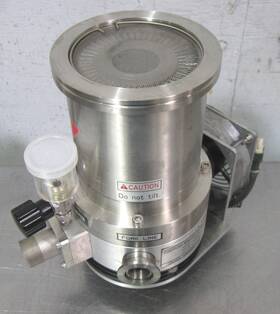
( Brand: Osaka Vacuum ), ( Manufacturer Part Number: TH200 ), ( Part Type: Vacuum Pump Flange )
Review OSAKA VACUUM Turbomolecular Turbo Pump Nw100 Flange
The **Osaka Vacuum TH200 C201961 Turbomolecular Turbo Pump with NW100 Flange** is a high-performance, precision-engineered vacuum solution designed for demanding laboratory, research, and industrial applications requiring ultra-high vacuum (UHV) environments. Part of Osaka Vacuum s renowned **TH200 series**, this turbomolecular pump combines cutting-edge turbomolecular technology with robust mechanical design to deliver exceptional pumping speeds, reliability, and efficiency. The **C201961 model** is specifically optimized for compatibility with **NW100 (ISO-KF100) flange connections**, making it an ideal choice for systems requiring seamless integration with standard vacuum chambers, analytical instruments, or process equipment. With a nominal pumping speed of up to **200 liters per second (L/s) for nitrogen**, this pump excels in rapidly achieving and maintaining ultra-high vacuum levels, typically below **1 10 Torr (1.3 10 Pa)**, while minimizing gas load and ensuring stable operation across a wide range of gases, including inert and reactive species. Its **ceramic-coated rotor and stator assembly** enhances durability, reduces wear, and extends operational lifespan, even under continuous high-load conditions. The pump s **inverted design** allows for easy installation in vertically oriented systems, while its **compact yet sturdy housing** ensures minimal footprint without compromising performance. Featuring **Osaka Vacuum s advanced bearing system**, including a **ceramic ball bearing** and **magnetic levitation (MagLev) option** (available as an upgrade), the TH200 C201961 minimizes friction, reduces maintenance requirements, and enhances long-term reliability. The pump is equipped with a **digital control interface**, enabling precise monitoring and adjustment of operating parameters such as speed, pressure, and temperature, while its **integrated vacuum gauge** provides real-time feedback for optimal system performance. Additionally, the **NW100 flange compatibility** ensures compatibility with a vast array of vacuum chambers, mass spectrometers, thin-film deposition systems, and other analytical instruments, making it a versatile solution for both research and production environments. With its **low noise operation (typically below 60 dB at full speed)** and **energy-efficient motor**, the TH200 C201961 delivers a quiet, efficient, and sustainable vacuum solution, ideal for sensitive applications where noise and power consumption are critical factors. Whether used in semiconductor manufacturing, surface science research, or advanced materials processing, this turbomolecular pump exemplifies Osaka Vacuum s commitment to innovation, precision, and engineering excellence, providing users with a dependable tool for achieving the highest standards of vacuum performance.
### **Pros and Cons of buying a Osaka Vacuum TH200 C201961 Turbomolecular Turbo Pump with NW100 Flange**
#### **Pros**
1. **High Pumping Speed and Efficiency**
The TH200 turbomolecular pump is designed for high-throughput applications, offering a maximum pumping speed of up to 200 L/s for nitrogen (N ). This makes it suitable for applications requiring rapid evacuation, such as semiconductor processing, mass spectrometry, or thin-film deposition.
2. **Reliable and Durable Construction**
Osaka Vacuum is a well-established manufacturer known for producing robust vacuum equipment. The TH200 features a sturdy design with high-quality materials, ensuring long-term reliability in demanding environments.
3. **Compatibility with NW100 Flange**
The NW100 (ISO-KF100) flange standard is widely used in scientific and industrial vacuum systems, making this pump easily integrable with existing setups. This reduces the need for custom adapters or modifications.
4. **Low Vibration and Noise Levels**
Turbomolecular pumps like the TH200 are generally quieter and produce less vibration compared to mechanical roughing pumps, which is beneficial for sensitive experiments or precision applications.
5. **Wide Range of Applications**
Beyond semiconductor manufacturing, this pump can be used in:- **Mass spectrometry** (for high-vacuum requirements)
- **Surface science** (e.g., LEED, AES)
- **Thin-film deposition** (PVD, sputtering)
- **Medical and pharmaceutical research** (where clean, controlled environments are critical)
6. **Easy Maintenance and Serviceability**
Osaka Vacuum pumps are designed with accessibility in mind, allowing for straightforward maintenance, such as rotor inspection, bearing replacement, and seal servicing. The company also provides technical support and spare parts.
7. **Energy Efficiency**
Compared to some older turbomolecular pump models, modern designs like the TH200 are optimized for lower power consumption while maintaining high performance.
8. **Global Support and Warranty**
Osaka Vacuum has a strong international presence, offering warranty coverage, authorized service centers, and technical documentation in multiple languages.
---
#### **Cons**
1. **High Initial Cost**
Turbomolecular pumps, especially high-performance models like the TH200, are expensive upfront. The price may be prohibitive for small labs, startups, or budget-conscious researchers unless funding is available.
2. **Dependence on Forevacuum System**
The TH200 requires a roughing pump (e.g., a diaphragm or scroll pump) to achieve its full performance. This adds to the overall system cost and complexity, as the forevacuum stage must be properly sized and maintained.
3. **Sensitivity to Contaminants**
Turbomolecular pumps are susceptible to damage from:- **Oils or vapors** (if the forevacuum pump is not properly sealed)
- **Particulate matter** (dust, debris)
- **Corrosive gases** (e.g., chlorine, fluorine)
Poor maintenance or improper handling of the system can lead to reduced lifespan or failure.
4. **Limited Lifespan Compared to Mechanical Pumps**
While turbomolecular pumps are durable, their rotors and bearings have a finite lifespan (typically 5 10 years with proper maintenance). Unlike mechanical pumps, they cannot be indefinitely repaired and may require replacement at some point.
5. **Complex Installation and Alignment**
Proper installation, including alignment with the flange and connection to the forevacuum system, requires precision. Misalignment or improper sealing can lead to leaks, reduced performance, or damage.
6. **Potential for High Operating Costs**
While energy-efficient, the cost of spare parts (e.g., bearings, seals, rotors) and maintenance over time can add up, especially if the pump is used intensively.
7. **Noise and Heat Generation**
Although quieter than some alternatives, turbomolecular pumps still generate some noise and heat, which may require additional cooling or sound-dampening measures in sensitive environments.
8. **Depreciation Over Time**
Like most high-tech equipment, turbomolecular pumps depreciate in value. If the system is not critical for long-term use, the investment may not yield a return.
---
### **Ending Conclusion**
The **Osaka Vacuum TH200 C201961 turbomolecular pump with NW100 flange** is a **high-performance, reliable, and versatile** solution for applications requiring high vacuum levels. Its strengths lie in its **speed, durability, and compatibility with standard vacuum systems**, making it ideal for **semiconductor processing, research labs, and industrial applications** where precision and efficiency are paramount.
However, the **high upfront cost, dependency on a forevacuum system, and sensitivity to contaminants** are significant drawbacks. It is **not a cost-effective choice for casual or low-budget users** but is **justified for professional, high-demand environments** where performance and longevity are critical.
### **Recommendation**
- **Buy if:**- You require **high vacuum performance** (e.g., for semiconductor manufacturing, mass spectrometry, or thin-film deposition).
- Your budget allows for the **initial investment and long-term maintenance costs**.
- You have access to **proper training and technical support** for installation and servicing.
- The pump will be used **intensively and for an extended period** (justifying the cost).
- **Avoid if:**- Your application does **not require ultra-high vacuum** (a lower-cost turbopump or mechanical pump may suffice).
- You are working with **corrosive or highly contaminated gases** without proper filtration.
- Your budget is **limited**, and you cannot justify the long-term expenses.
- You lack **expertise in vacuum system maintenance** (consider leasing or purchasing a used model with a warranty).
**Alternative Considerations:**- If cost is a concern, explore **used or refurbished models** from reputable vendors.
- For smaller-scale applications, a **lower-speed turbopump** (e.g., 100 150 L/s) may be sufficient.
- If budget allows, **higher-end models** (e.g., with integrated forevacuum or advanced control systems) may offer better long-term value.
Ultimately, the TH200 is a **strong choice for professionals** who prioritize performance and reliability over cost savings. For casual or low-volume users, a more affordable alternative may be preferable.
Details:
The unpacked weight of this item is 22 pounds. Approximate overall unpacked dimensions: 10 L x 6 W 11. No software, power cords, or other accessories are included unless stated above. The rotor spins freely and spun for about 25 seconds when I it with my finger.
This Osaka TH200 Turbomolecular Turbo Vacuum Pump looks to be in good cosmetic condition, showing some minor signs of wear.
part #: th200 prices
- $200.00-$300.00
specifications valvplu:
- brand: Osaka Vacuum
- mpn: Th200
- part type: Vacuum Pump Flange
shipping valvplu:
- carrier: UPS
- class: Standard
- type: Calculated
- service: UPS Ground
- cost: $96.99
- transit: 3-7 Days
returns valvplu:
- policy: No Returns
seller valvplu:
- city: Gilroy, California
- rating: 100.0%
- # reviews: 52467
general valvplu:
- Pumps Pump Accessories > Vacuum Pumps > Other Vacuum Pumps
- condition: For parts or not working
offer valvplu:
- options: Ship-to-home
- sold: 0
- availability: In Stock
- quantity: 1
- started: March 2, 2026
payments valvplu:
- wallet: Apple-pay
- credit card: Diners-club
- other
Osaka Vacuum TH200 Is Similar To:
- A097215-7 Osaka Tc530 Turbo Vacuum (34.3% similar) Osaka TC530 turbo Vacuum pump controller. Good working condition...(November 20th, 2017)
- Tc1103 Osaka Vacuum 650va Digital (34.7% similar) width in inches: 20. Minimum handling charge is 75 onto a standard pallet and increases for custom pallet's. Osaka Vacuum TC1103 650VA digital turbomolecular pump power supply unit module this offer only comes with what is pictured or listed in the. B program version: P02. Standard shipping prices...(February 16th, 2018)
- Tc76-10 Osaka Vacuum Ltd Turbo (40% similar) ...(August 27th, 2017)
- Td2000 Osaka D144487 Vacuum Power (32.7% similar) All offered products are sold as advertised, is and without warranty. Unfortunately I lack the knowledge and equipment to test properly so it is being sold as-is. No software, power cords, or other accessories are included unless stated above. This Osaka Vacuum TD2000 power supply looks to be in ...(October 17th, 2017)
- Tg-1300 Osaka Vacuum Compound Molecular Pump (53.2% similar) High cost, value equipment, acquired from a reliable source. All statements regarding products and their configurations are made to the best of our ability with assumption that buyer is knowledgeable proficient in use this type equipment. No manuals,no standard power cords, even if it appears in the...(April 1st, 2018)
- Tg1100fbwb Osaka Vacuum Turbomolecular Pump System Hours Used Tested Working (51.1% similar) The bureaus of us. Serial numbers or country of manufacture may vary. The physical condition is good, but there are signs of previous use and handling. Pictured test equipment is not included or available for sale. Only items pictured are included: if a part is not pictured, or mentioned above, then...(July 13th, 2018)
- Tg200rwx Oshaka Vacuum Osaka Uhv (30.9% similar) It is important that you keep all damaged shipping cartons and contents. 232PRIORITY worldwide tracked packet 12'' x 6 '' 3 lbs. 232PRIORITY worldwide when you purchasing more than one item, please let me know so that the shipping may be combined. All merchandise shipped is carefully pre-checked and...(September 4th, 2017)
- Tg220f Osaka Vacuum Tg-f Series (33.3% similar) length in inches: 12. Osaka Vacuum TG220F tag-f series compound turbo pump turbo molecular pump module this offer only comes with what is pictured or listed in the. Do not discard the packaging. Your satisfaction is extremely important to us. All parts, accessories, cables, etc. All parts, ...(December 30th, 2017)
- Tg220frwb Osaka Vacuum Water Cooling Compound Molecular Pump For (51.2% similar) width in inches: 12. All parts, including accessories and cables are only included if pictured or listed in the. This unit has been used. USPS or ups ground. 30-DAY DOA warranty this product carries. All parts, accessories, cables, etc. Do not discard the packaging. Standard shipping prices are ...(October 1st, 2018)
- Tg3213bw Osaka Vacuum Compound Molecular Pump (52.7% similar) Please commit to buy only after you decided purchase are ready pay. Warranty, if any, pertains to the physical operating condition of unit only. New Osaka Vacuum compound molecular pump TG3213BW. No software are included with any systems. Please refer to pictures are actual of the pump. Good working...(May 2nd, 2018)
- Tg3260mbw Osaka Vacuum Compound Molecular Pump Power Supply Cable Hva (47.8% similar) Used Osaka Vacuum compound molecular pump TG3260MBW with power supply TC3260, cable, hvac 1203R valves. Warranty, if any, pertains to the physical operating condition of unit only. Technical support for this item is not included in the offer. Box or APO FPO address. Good working condition. Please ...(June 3rd, 2018)