VEECO RG-83 Ionization Gauge Control
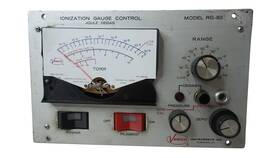
( Brand: Veeco ), ( Manufacturer Part Number: RG-83 ), ( Part Type: Control Gauge )
Review VEECO Ionization Gauge Control Model Free Shipping
The **Veeco RG-83 Ionization Gauge Control** is a high-performance, precision instrument designed for accurate pressure measurement and control in vacuum systems, making it an indispensable tool for industries ranging from semiconductor manufacturing and thin-film deposition to materials research and surface science. Engineered with Veeco s reputation for reliability and innovation, this control unit is specifically tailored for use with ionization gauges, such as the RG-83 head, to provide real-time feedback on chamber pressure with exceptional sensitivity and stability. At its core, the RG-83 operates on the principle of ionization gauge technology, where a filament emits electrons that ionize residual gas molecules in the vacuum chamber, generating a measurable ion current proportional to the gas density. This current is then amplified, processed, and displayed with high precision, allowing operators to monitor pressures as low as **10 Torr (10 Pa)** with remarkable accuracy, depending on the specific gas composition and operating conditions.
The RG-83 control features a robust, modular design that integrates seamlessly with modern vacuum systems, offering both analog and digital outputs for flexible integration with PLCs, data acquisition systems, or standalone monitoring setups. Its user-friendly interface includes a clear, backlit display with adjustable parameters such as filament current, ion current, and pressure readings, along with configurable alarms and setpoints to ensure process consistency. The unit incorporates advanced features like **auto-zeroing** to compensate for background noise and **filament lifetime monitoring** to optimize performance and extend component longevity, reducing downtime and maintenance requirements. Additionally, the RG-83 supports multiple gas types, including noble gases and reactive species, through its adaptive gain settings, which adjust for variations in ionization efficiency across different gases.
Built to withstand the demanding environments of industrial and research applications, the RG-83 control is constructed from high-quality materials, including corrosion-resistant enclosures and precision-engineered electronics, ensuring durability and long-term reliability. Its compact yet sturdy form factor allows for easy installation in confined spaces, while its compliance with industry standards such as **ASTM F76** for ionization gauge calibration ensures traceability and consistency in pressure measurements. Whether used in ultra-high-vacuum (UHV) systems, molecular beam epitaxy (MBE) chambers, or other critical applications requiring sub-atmospheric control, the RG-83 delivers unparalleled precision, stability, and ease of use. By combining cutting-edge technology with intuitive operation, this ionization gauge control empowers engineers and researchers to achieve optimal process conditions, enhance yield, and maintain the integrity of their vacuum environments with confidence.
### **Pros and Cons of Buying a Veeco RG-83 Ionization Gauge Controller**
#### **Pros:**The Veeco RG-83 is a well-established ionization gauge controller used primarily in vacuum systems, particularly in semiconductor manufacturing, thin-film deposition, and research applications. Its advantages include:
1. **Reliability and Durability** Veeco (now part of Applied Materials) has a long history in vacuum technology, and the RG-83 is known for its robust construction and long operational lifespan, especially in industrial settings.
2. **Precision and Accuracy** Ionization gauges measure pressure in ultra-high vacuum (UHV) and high-vacuum (HV) ranges with high sensitivity. The RG-83 provides stable readings across a wide pressure range (from 10 to 10 Torr), making it suitable for critical processes where pressure control is essential.
3. **Compatibility with Veeco Systems** If you already own or plan to integrate other Veeco vacuum components (such as pumps, chambers, or controllers), the RG-83 will seamlessly fit into your existing setup, reducing compatibility issues.
4. **Modular and Upgradable** The RG-83 supports various ionization gauge heads (e.g., Bayard-Alpert, Penning, or cold cathode types), allowing flexibility depending on the application. Some models also support digital interfaces for better data logging and automation.
5. **Industrial-Grade Build** Designed for harsh environments, the RG-83 can withstand vibrations, temperature fluctuations, and exposure to corrosive gases (within limits), making it suitable for manufacturing environments.
6. **Proven Performance in Semiconductor and Research** Many leading research labs and semiconductor fabs rely on Veeco s vacuum solutions, and the RG-83 has a track record of consistent performance in these fields.
7. **Analog and Digital Outputs** The controller provides both analog (4-20 mA) and digital (RS-232, GPIB, or Ethernet in some models) outputs, allowing integration with PLCs, data acquisition systems, or SCADA platforms.
8. **Calibration and Support** Veeco (or Applied Materials) offers calibration services and technical support, ensuring long-term reliability and troubleshooting assistance.
---
#### **Cons:** While the RG-83 is a high-quality instrument, it also has some drawbacks to consider:1. **High Initial Cost** Like most Veeco products, the RG-83 is an expensive piece of equipment, especially when compared to newer or alternative brands. The cost includes not just the controller but also the ionization gauge head and potential calibration services.
2. **Complexity and Maintenance** Ionization gauges require periodic maintenance, such as filament replacement (in hot cathode models), vacuum system leak checks, and calibration. Improper handling can lead to gauge failure or inaccurate readings.
3. **Limited Modern Interfaces** Some older models of the RG-83 may lack advanced digital communication protocols (e.g., Ethernet/IP, Profibus) found in newer controllers. This can be a limitation if you need seamless integration with modern automation systems.
4. **Sensitivity to Contamination** Ionization gauges can be affected by residual gases, oil backstreaming, or chemical deposits, which may require additional purification systems (e.g., getters, cold traps) to maintain accuracy.
5. **Depreciation Over Time** As vacuum technology evolves, newer ionization gauge controllers may offer better resolution, faster response times, or improved digital features. The RG-83, while still functional, may become outdated in terms of software and connectivity.
6. **Single-Purpose Use** The RG-83 is specialized for ionization gauge applications and cannot measure other parameters (e.g., temperature, flow rate, or partial pressure via mass spectrometry). For comprehensive vacuum monitoring, additional sensors may be needed.
7. **Potential for Compatibility Issues** While Veeco components are generally compatible, integrating the RG-83 with non-Veeco systems (e.g., pumps from other manufacturers) may require additional adapters or validation testing.
8. **Training and Expertise Required** Operating and maintaining an ionization gauge system effectively requires specialized knowledge. Without proper training, users may struggle with calibration, troubleshooting, or interpreting readings accurately.
---
### **Conclusion and Recommendation**
The **Veeco RG-83 Ionization Gauge Controller** is a **highly reliable, precision instrument** ideal for **industrial vacuum applications, particularly in semiconductor manufacturing, thin-film deposition, and research environments** where accurate pressure control is critical. Its **durability, compatibility with Veeco systems, and proven performance** make it a strong choice for users who prioritize stability and long-term functionality.
However, the **high cost, maintenance requirements, and lack of modern digital interfaces** in some models may be drawbacks for smaller labs, budget-conscious buyers, or those seeking the latest automation features. If your application demands **ultra-high precision, compatibility with existing Veeco equipment, or a legacy system upgrade**, the RG-83 remains a **solid investment**.
For **budget-friendly alternatives**, consider newer ionization gauge controllers from other manufacturers (e.g., Pfeiffer Vacuum, Edwards, or Leybold) that offer **similar performance with updated digital interfaces and lower costs**. If you require **partial pressure analysis**, a **quadrupole mass spectrometer (QMS)** or **residual gas analyzer (RGA)** may be a better long-term solution.
**Final Recommendation:** - **Buy the Veeco RG-83 if:**- You are part of an **industrial or research setting** with existing Veeco vacuum infrastructure.
- You need a **durable, high-precision gauge** for **UHV/HV applications** with minimal downtime.
- You can justify the **higher upfront cost** with long-term reliability and support.
- **Avoid or consider alternatives if:**- You are working with a **tight budget** and can find equally capable (but newer) controllers at a lower cost.
- You require **advanced digital integration** (e.g., Ethernet, PLC compatibility) that the RG-83 may lack.
- Your application involves **partial pressure analysis**, in which case a **QMS/RGA system** would be more versatile.
For most **high-end industrial or research applications**, the RG-83 remains a **strong, well-supported choice**, but always weigh its pros and cons against your specific needs before purchasing.
Details:
Does Not Include: Cables and any other accessories not mentioned above nor shown in the pictures. Cosmetic condition: The Device has a missing glass screen cover and power cord is cut off, It Some scratches shows some signs of wear due to the previous usage, Please refer pictures. Condition: For fix or parts, power cord cut off, has a missing glass screen cover, This item is being sold for parts with no return. Package Includes: Only as shown in the pictures.
part #: rg83 prices
- $37.50-$125.00
specifications valvplu:
- brand: Veeco
- mpn: Rg-83
- part type: Control Gauge
payments valvplu:
- wallet: Apple-pay
- credit card: Mastercard
- other
offer valvplu:
- options: Ship-to-home
- quantity: 1
- sold: 0
- started: May 7, 2026
- best offers: True
- availability: In Stock
shipping valvplu:
- type: Fixed
- class: Standard
- transit: 2-5 Days
- service: Standard
- cost: $0.00
returns valvplu:
- policy: No Returns
general valvplu:
- Pumps Pump Accessories > Vacuum Pumps > Other Vacuum Pumps
- condition: For parts or not working
seller valvplu:
- rating: 99.2%
- # reviews: 6740
- city: Columbus, Ohio
Veeco RG-83 Is Similar To:
- 5600-020 Veeco Vacuum Gauge Tube (33.3% similar) Open to any reasonable offers. Item is used but was pulled from a working environment...(October 26th, 2017)
- A38233000 Edwards Series Mcm Motor Control Module Veeco (35.4% similar) Always here to help. On the ask a question link at bottom of this listing. Orders are shipped to the cardholders billing address. Power cords and adapters are never included unless specifically mentioned. Warranty this item is guaranteed to be as described. Good luck buying. Edwards A38233000 series...(August 13th, 2018)