AGILENT MS30 Varian Mono Rotary Vane Vacuum Pump 8499225R001 0370408503 200-240V
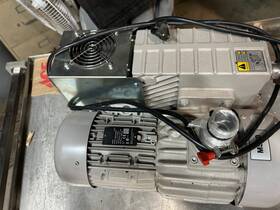
( Brand: Agilent ), ( Manufacturer Part Number: MS30 ), ( Part Type: Vacuum Pump ), ( Maximum Power: 1 Hp ), ( Maximum Flow Rate: 500 L/min, 17.66 Cfm ), ( Number Of Stages: Single Stage ), ( Maximum Pressure: 0.05 Mbar, 0.0375 Torr )
Review AGILENT Varian Mono stage Rotary Vane Vacuum Pump 200-240v
The **Agilent MS30 Varian 8499225R001 (0370408503) Mono-Stage Rotary Vane Vacuum Pump** is a high-performance, oil-sealed vacuum pump designed for precision laboratory applications, offering reliable and consistent performance in a wide range of analytical and scientific environments. Engineered by Agilent Technologies (now part of Keysight Technologies), this pump is specifically tailored for use with mass spectrometers, gas chromatographs, and other analytical instruments where stable, clean vacuum is essential. Operating on a mono-stage rotary vane principle, it delivers a robust pumping speed of up to **200 L/s at atmospheric inlet pressure**, making it ideal for applications requiring efficient evacuation of gases and vapors while maintaining low ultimate vacuum levels. The pump is built to handle a broad range of gases, including air, nitrogen, argon, and other inert or reactive gases, ensuring compatibility with most laboratory setups without compromising performance.
Constructed with durability and precision in mind, the MS30 features a **stainless steel rotor and vanes**, which minimize wear and contamination while extending the pump s operational lifespan. The oil-sealed design ensures smooth operation and effective sealing, reducing the risk of gas leakage and maintaining a consistent vacuum level. The pump is equipped with a **high-quality synthetic oil** that resists degradation from high temperatures and chemical exposure, further enhancing reliability in demanding applications. Its compact yet robust construction allows for easy integration into laboratory benches or instrument setups, with a **200 240V AC power supply** ensuring compatibility with standard electrical systems worldwide.
Safety and ease of use are prioritized in the MS30 s design, featuring an **integrated oil level indicator** and a **pressure relief valve** to prevent overpressurization and protect the pump from damage. The pump also includes a **quiet operation mode**, reducing noise levels to approximately **60 dB(A)**, making it suitable for environments where noise reduction is important. Maintenance is streamlined with accessible oil fill and drain ports, allowing for quick oil changes and easy servicing. Additionally, the pump s **compatibility with Agilent s analytical instruments** ensures seamless integration with mass spectrometers, gas chromatographs, and other high-precision systems, where consistent vacuum performance is critical for accurate results.
Whether used in research laboratories, industrial quality control, or academic settings, the Agilent MS30 Varian rotary vane vacuum pump delivers dependable performance with minimal downtime. Its combination of **high pumping speed, low maintenance requirements, and robust construction** makes it a trusted choice for applications where vacuum integrity directly impacts experimental success. With proper care and regular servicing, this pump provides years of reliable service, supporting the demanding needs of modern analytical instrumentation.
### **Pros and Cons of buying a Agilent MS30 Varian 8499225R001 (0370408503) Mono-Stage Rotary Vane Vacuum Pump (200-240V)**
#### **Pros:**1. **Reliability and Brand Reputation** Agilent (formerly Varian) is a well-established manufacturer in analytical instrumentation, known for durable and high-performance equipment. This pump is designed for laboratory use, where reliability is critical.
2. **Compatibility with Agilent/Varian Systems** Since this pump is part of the Varian/Agilent ecosystem, it is likely optimized for seamless integration with other Agilent instruments (e.g., mass spectrometers, gas chromatographs). This reduces compatibility issues and simplifies maintenance.
3. **Mono-Stage Design for Simplicity** A single-stage rotary vane pump is easier to maintain than multi-stage pumps, as it has fewer moving parts and a simpler internal structure. This can lead to lower repair costs and longer service life if properly maintained.
4. **Decent Vacuum Range (200-240V)** The pump is designed to handle moderate vacuum levels, making it suitable for applications such as roughing stages in mass spectrometry, gas chromatography, or other analytical processes where high vacuum is not required.
5. **Pre-Owned/Used Market Availability** Since this is a model number (8499225R001), it may be available at a lower cost in the used market, offering a cost-effective alternative to new equipment.
6. **Proven Performance in Lab Environments** Rotary vane pumps are widely used in laboratories for their robustness and ability to handle various gases without severe contamination issues (compared to oil-free pumps).
---
#### **Cons:**1. **Age and Wear** If this is a used or refurbished unit, it may have accumulated wear over time. Rotary vane pumps rely on seals and vanes, which degrade with use, potentially leading to reduced efficiency or leaks.
2. **Oil-Based Operation** Most mono-stage rotary vane pumps require oil for lubrication and sealing. This means:- **Maintenance Requirements:** Regular oil changes and seal replacements are necessary to prevent contamination of downstream systems (e.g., mass spectrometers).
- **Contamination Risk:** If oil leaks or degrades, it can contaminate samples or instruments, leading to costly downtime or data corruption.
- **Environmental Concerns:** Oil disposal must comply with local regulations, adding administrative overhead.
3. **Limited Ultimate Vacuum** A mono-stage pump typically achieves lower vacuum levels (e.g., 10 to 10 mbar) compared to multi-stage or turbo pumps. If your application requires higher vacuums (e.g., UHV for some mass spectrometry applications), this pump may need to be paired with a secondary pump (e.g., a diffusion or turbo pump).
4. **Power Consumption** Rotary vane pumps can draw significant power, especially when running continuously. This may increase operational costs in high-usage environments.
5. **Noise and Vibration** These pumps can be noisy and generate vibration, which may be problematic in sensitive laboratory settings or shared workspaces.
6. **Potential for Hidden Issues** Without a thorough inspection or service history, a used pump may have undetected problems such as:- Worn vanes or bearings.
- Cracked or degraded seals.
- Electrical or motor issues.
- Internal corrosion or contamination.
7. **Compatibility with Modern Systems** Older Agilent/Varian equipment may lack compatibility with newer software or control interfaces, requiring additional adapters or manual adjustments.
---
### **Conclusion:**The **Agilent MS30 Varian 8499225R001 mono-stage rotary vane vacuum pump** is a functional and reliable choice for applications requiring moderate vacuum levels in laboratory settings, particularly if it is already integrated into an existing Agilent system. Its simplicity, durability, and compatibility with legacy equipment make it a practical option for users who prioritize ease of use and cost efficiency.
However, the **oil-based operation, maintenance demands, and potential age-related wear** are significant drawbacks. If you plan to use this pump long-term, you must budget for regular maintenance (oil changes, seal replacements) and be prepared for potential contamination risks. Additionally, if your application requires higher vacuums, you will need to pair it with a secondary pump, increasing complexity and cost.
For **new installations or high-vacuum applications**, a modern oil-free or turbo pump may be a better long-term investment despite a higher upfront cost. For **budget-conscious users with existing Agilent infrastructure**, this used pump could be a viable option if inspected thoroughly and maintained properly.
---
### **Recommendation:** 1. **If Buying Used:**- **Inspect Thoroughly:** Have a vacuum technician or Agilent-certified professional inspect the pump for wear, leaks, and oil condition before purchase.
- **Check Service History:** Request full maintenance records, including oil change logs and any past repairs.
- **Test Under Load:** If possible, run the pump briefly to verify performance and listen for unusual noises.
- **Budget for Maintenance:** Allocate funds for regular oil changes (every 1,000 2,000 hours or as recommended by Agilent) and potential seal replacements.
2. **If Considering New Equipment:**- **Evaluate Alternatives:** For modern labs, an **oil-free rotary vane pump** (e.g., from Pfeiffer, Edwards) or a **hybrid system** (e.g., rotary vane turbo pump) may offer better long-term reliability and lower maintenance.
- **Assess Application Needs:** If your vacuum requirements exceed the capabilities of a mono-stage pump, invest in a multi-stage or turbo pump setup.
3. **Alternative Sources:**- If this specific model is unavailable, consider **refurbished Agilent pumps** from authorized vendors, as they may come with warranties and inspections.
- For high-volume use, explore **energy-efficient models** or **smart pumps** with built-in diagnostics to reduce downtime.
Ultimately, the **MS30 Varian pump is a sound used purchase for compatible, low-to-moderate vacuum applications** if maintained diligently. However, weigh the trade-offs carefully against newer technologies to ensure it meets your long-term needs.
Details:
Freight approx 80 lbs. Shipping in the us only shipping is $120. With a maximum power of 1 hp and flow rate 500 L/min, this single-stage pump can achieve pressure 0.05 mbar.
part #: ms30 price
- $1995.00
specifications valvplu:
- brand: Agilent
- mpn: Ms30
- part type: Vacuum Pump
- maximum power: 1 Hp
- maximum flow rate: 500 L/min, 17.66 Cfm
- number of stages: Single Stage
- maximum pressure: 0.05 Mbar, 0.0375 Torr
offer valvplu:
- availability: In Stock
- options: Ship-to-home
- best offers: True
- started: January 31, 2026
- sold: 0
- quantity: 1
general valvplu:
- condition: Used
- Pumps Pump Accessories > Vacuum Pumps > Rotary Vane Pumps
shipping valvplu:
- type: Fixed
- service: USPS Ground Advantage
- class: Standard
- cost: $120.00
- transit: 4-9 Days
- carrier: USPS
seller valvplu:
- rating: 100.0%
- # reviews: 603
- city: Westerly, Rhode Island
returns valvplu:
- paid by: Buyer
- policy: Returns Accepted
- method: Money back
- time: 14 Days
payments valvplu:
- other
- credit card: Diners-club
- wallet: Paypal
Agilent MS30 Is Similar To:
- 0178 Varian Agilent 3700l-s 2200w (33.6% similar) If in doubt, please before purchasing. Please review images thoroughly before purchasing. Our contact: Rodney Wang SC asset management, inc. Varian Agilent 0178 3700LS 2200W 500CC ISO 250-F HIV diffusion pump VHS-250 this offer only comes with what is pictured or listed in the. This unit has been ...(September 24th, 2017)
- 0420p1201307 Agilent Technologies Varian Sd-90 (28.8% similar) Varian SD-90 rotary vane pump two stage -oil sealed direct drive applications: various industrial and scientific. The SD-90 has a built-in oil shield and forced air ventilation. It is reliable and operates at low noise levels with the anti noise system. Comes with Franklin motor power cord as ...(November 21st, 2017)
- 050025 Agilent Lot Of Kavm Vacuum Adapter Male Vcr To Kf (31% similar) I have up for grab a lot of 5 very nice adapter KAVM050025 - Agilent vacuum technologies adapter...(April 16th, 2018)
- 370222801 Agilent Varian Hs Vacuum Pump Mdl Microns (42.3% similar) Manufactured 2007 vacuum range tested pulls as low 16 micron takes inland 19 oil see link dimensions outside L20 x w7 H10. Minor scratches. 5 port size KF25 shipping item weight 67 lbs 75 l 31 x W13 H15 continental USA free Canada 149. Hash ITEM1C8C058999THE above used includes only what is ...(April 14th, 2018)
- 370222802 Agilent Varian Hs Vacuum Pump Model Pulls Micron (40.3% similar) Powers on motor, pump and controls working well. Cosmetic condition good. 5 port size KF25 shipping item weight 67 lbs 75 l 31 x W13 H15 continental USA free Canada item INLAND-19-VACUUM-PUMP-OIL-128OZ-1-GALLON- 33. Hash ITEM1C8C058999THE above used lab equipment includes only what is pictured and ...(May 24th, 2018)
- 8499240 Agilent Varian Vacuum Technologies Pump (39.1% similar) Is there a dock forklift available. Delivery hours: lift-gate required. This Agilent varian vacuum technologies MS40 pump model , 200-240VAC 1-PHASE, appears to be in good cosmetic condition, although there are a few small dings, scratches, signs of previous use. This is the only testing that has ...(April 25th, 2018)
- 8698933 Varian Agilent Turbomolecular Pump Rebuilt By Provac Sales Inc (28.2% similar) This includes a full line of rebuilt turbo, vane, piston, cry, scroll, blower, vacuum pumps, systems and helium leak detectors. We maintain one of the largest inventories rebuilt and ready-to-ship vacuum pumps in USA. We buy surplus and used vacuum equipment. Prozac sales, inc. ISO-160F inlet, KF-25...(January 4th, 2019)
- 8698946 Agilent Varian Tv Turbo Sem Macro Torr Pump (36.5% similar) Smaller items will normally ship USPS and heavier FedEx ground. Agilent varian TV 1001NAV turbo v 1001 seam macro torr pump as-is this item is in good condition and the fan blade turns freely but its untested selling as-is, no return...(April 6th, 2019)
- 929-7009-s003 Varian Agilent Dual Ion (21.1% similar) Info: the shipping price is only for us 48 contiguous states. Agilent varian dual ion pump controller 120V 50 60HZ 600VA barely used condition varian part no: S003INFO: what you see in the pictures is get, no cables, power cords,software...(January 5th, 2018)
- 9297003 Varian Agilent Dual Ion Pump Controller (28.6% similar) Agilent varian dual ion pump controller 120V 50 60HZ 600VA plugged it in and didn't power up...(March 17th, 2018)
- 9299010 Agilent Used Ion Pump Controller Pn (27.9% similar) Make an offer. Used Agilent 4UHV ion pump controller pn: unit powers on, unable to test for functionality. Feel free to ask questions...(August 16th, 2018)