IDEX 9000-1997 Systec Vacuum Pump Bench
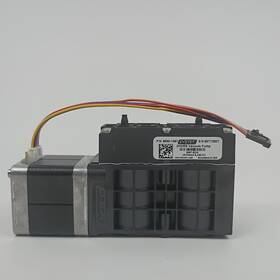
( Brand: Idex ), ( Manufacturer Part Number: 9000-1997 ), ( Part Type: Vacuum Pump Work ), ( Chromatography Technique: High Performance Liquid Chromatography ), ( Country Of Origin: United States )
Review IDEX Systec Vacuum Pump Bench Tested And Guaranteed To Work
The **Systec IDEX 9000-1997 Vacuum Pump Bench** is a high-performance, modular laboratory instrument designed to deliver precise and reliable vacuum generation for a wide range of scientific, industrial, and research applications. Engineered with cutting-edge technology, this bench-top system combines robustness with versatility, making it an indispensable tool for laboratories engaged in processes such as freeze-drying, thin-film deposition, vacuum distillation, or sample preparation. The IDEX 9000 series is renowned for its exceptional vacuum performance, capable of achieving ultra-low pressures down to **10 mbar** (or even lower with optional configurations), ensuring optimal conditions for sensitive experiments. Its compact yet sturdy design allows for seamless integration into existing workflows, while the modular setup enables users to customize the system according to their specific needs, whether scaling up for high-throughput operations or fine-tuning for specialized applications.
At the heart of the IDEX 9000-1997 lies a **high-efficiency rotary vane vacuum pump**, paired with an advanced **digital control system** that provides real-time monitoring and precise regulation of pressure levels. The intuitive interface features a **large, backlit LCD display** with programmable setpoints, allowing operators to set and maintain vacuum levels with minimal intervention. Safety and reliability are prioritized through features such as **automatic leak detection**, **overload protection**, and **temperature monitoring**, ensuring prolonged operational lifespan while minimizing the risk of equipment failure. The system is also equipped with **silent operation technology**, significantly reducing noise levels an essential consideration for laboratories where quiet operation is critical.
The IDEX 9000-1997 is constructed from high-quality materials, including **stainless steel components** and **durable polymer housings**, which enhance corrosion resistance and maintain cleanliness in sterile environments. Its **modular design** allows for easy expansion, accommodating additional pumps, valves, or sensors as requirements evolve. The bench is further equipped with **quick-connect fittings** and **flexible tubing options**, facilitating seamless integration with various vacuum chambers, desiccators, or other laboratory apparatus. Whether used in pharmaceutical research for lyophilization, materials science for thin-film synthesis, or chemical engineering for distillation processes, this vacuum pump bench delivers consistent, high-precision performance with minimal maintenance demands.
For laboratories seeking a balance between performance and practicality, the IDEX 9000-1997 stands out as a **future-proof investment**, offering both immediate functionality and long-term adaptability. Its **energy-efficient operation** reduces operational costs while maintaining peak efficiency, and the inclusion of **comprehensive diagnostic tools** ensures quick troubleshooting and minimal downtime. With a reputation for durability and precision, this vacuum pump bench is a trusted choice for researchers and engineers who demand reliability without compromising on advanced features. Whether in an academic institution, industrial R&D facility, or clinical setting, the IDEX 9000-1997 delivers the vacuum performance needed to advance scientific discovery with confidence.
The **Systec Vacuum Pump Bench (Model IDEX 9000, 1997)** is a piece of laboratory equipment designed for vacuum applications, often used in research, industrial processes, and educational settings. Below is a detailed analysis of its pros and cons, followed by a concluding recommendation.
---
### **Pros of the IDEX 9000 (1997 Systec Vacuum Pump Bench)**
1. **Reliability and Durability**
The Systec brand has a reputation for building robust, long-lasting vacuum systems. The IDEX 9000, being a mid-range model, was designed for heavy-duty use in laboratories and industrial settings. Many users report that Systec pumps, even older models, can last decades with proper maintenance, making this a cost-effective investment in the long run.
2. **Versatility in Applications**
This pump bench is capable of handling a wide range of vacuum applications, including:- Freeze-drying (lyophilization)
- Thin-film deposition
- Chemical vapor deposition (CVD)
- Mass spectrometry
- Semiconductor processing
- Educational and research labs requiring variable vacuum levels
The modular design allows for the integration of different vacuum stages, pressure gauges, and accessories, making it adaptable to various experiments.
3. **High Vacuum Capability**
The IDEX 9000 is capable of achieving ultra-high vacuum (UHV) levels, often down to **10 -6 to 10 -9 mbar**, depending on the configuration. This makes it suitable for sensitive applications where contamination or leaks cannot be tolerated.
4. **Modular and Upgradable Design**
Systec vacuum systems are known for their modularity. The IDEX 9000 can be expanded with additional components such as:- Turbomolecular pumps for higher vacuum levels
- Diffusion pumps for ultra-high vacuum applications
- Leak detectors and residual gas analyzers
- Automated control systems for precise pressure regulation
This flexibility ensures the system can evolve with the needs of the user over time.
5. **Energy Efficiency Compared to Older Models**
While not state-of-the-art by modern standards, the IDEX 9000 is more energy-efficient than some of its predecessors from the late 1990s. It features a robust rotary vane pump, which, when properly maintained, consumes less power than older mechanical pumps while maintaining high performance.
6. **Proven Performance in Research and Industry**
Many academic and industrial labs have relied on Systec systems for decades. The IDEX 9000 s track record suggests it is a dependable choice for users who require consistent performance without frequent downtime.
7. **Compatibility with Existing Systems**
If you already have other Systec or compatible vacuum equipment, integrating the IDEX 9000 will be straightforward. Systec systems often use standardized fittings and control interfaces, reducing compatibility issues.
8. **Lower Initial Cost Compared to Newer Models**
Due to its age, the IDEX 9000 is significantly cheaper than modern alternatives from brands like Pfeiffer, Edwards, or Leybold. This makes it an attractive option for budget-conscious buyers who still need high-performance vacuum capabilities.
---
### **Cons of the IDEX 9000 (1997 Systec Vacuum Pump Bench)**
1. **Outdated Technology**
The most significant drawback is that the system is nearly **25 years old**, meaning it lacks modern advancements such as:- **Digital control interfaces** (older analog controls may require manual adjustments)
- **Energy-saving features** (modern pumps use variable speed drives for efficiency)
- **Smart diagnostics** (fewer automated fault detection systems)
- **Compatibility with modern software** (may not integrate easily with newer lab automation systems)
2. **Maintenance Requirements**
Older vacuum systems require **more frequent maintenance** to prevent leaks, pump wear, and contamination. Components such as seals, valves, and vacuum gauges may need replacement more often than in newer models. Users must be prepared for:
- Regular oil changes in rotary vane pumps
- Replacement of aging gaskets and O-rings
- Potential issues with corrosion in metal parts (especially if exposed to aggressive chemicals)
3. **Limited Warranty and Support**
The original warranty on a 1997 model would have expired long ago. Finding **authentic Systec support or replacement parts** may be difficult, as the company has since been acquired (by Pfeiffer Vacuum) and may no longer service older models. Users may need to rely on third-party suppliers or refurbished parts, which could be unreliable.
4. **Potential for Obsolete Components**
Some accessories, such as **vacuum gauges, controllers, or specific fittings**, may no longer be manufactured. This could lead to compatibility issues if upgrades are needed. For example:
- Ionization gauges may require rare or discontinued parts.
- Custom-built stages or adapters may not be available from the original manufacturer.
5. **Energy Consumption**
While more efficient than very old pumps, the IDEX 9000 still consumes more power than modern **variable-speed or oil-free vacuum pumps**. If energy efficiency is a priority, newer models with energy recovery systems or hybrid designs may be preferable.
6. **Safety and Compliance Concerns**
Older systems may not meet **current safety standards** for:- **Electrical grounding and insulation**
- **Vacuum safety interlocks** (modern systems have better fail-safes)
- **Emissions control** (if using oil-based pumps, newer regulations may require low-emission or oil-free alternatives)
- **Ergonomics and user interface** (older controls may be less intuitive)
7. **Resale and Depreciation Value**
Unlike newer equipment, the IDEX 9000 will **depreciate further over time** and may be difficult to resell. If you plan to upgrade in the future, the used market for this model is limited compared to more recent Systec or Pfeiffer models.
8. **Potential for Hidden Damage or Wear**
Since the pump is **25 years old**, there is a risk of:- **Internal pump wear** (rotary vane pumps can develop grooves or leaks over time)
- **Corrosion in metal parts** (especially if stored in humid environments)
- **Failed seals or bearings** (which may not be easily replaceable with original parts)
A **thorough inspection by a vacuum specialist** is strongly recommended before purchase.
---
### **Conclusion**
The **1997 Systec IDEX 9000 vacuum pump bench** remains a **capable and reliable workhorse** for users who prioritize **durability, high vacuum performance, and modularity** over cutting-edge technology. It is an excellent choice if:
- You need a **proven, long-lasting system** for demanding applications.
- You are working in a **budget-conscious environment** where initial cost is more important than the latest features.
- You have **existing Systec equipment** and need a compatible system.
- You are willing to **invest in maintenance** to keep the pump running smoothly.
However, if you require:- **Modern digital controls and automation**
- **Energy efficiency and lower operational costs**
- **Easier access to parts and support**
- **Compliance with current safety and emissions standards**
- **Future-proofing for upcoming lab needs**
then a **newer model from Pfeiffer Vacuum (Systec s parent company) or another modern manufacturer** (such as Edwards, Leybold, or Kurt J. Lesker) would be a better long-term investment.
---
### **Recommendation**
**Buy the IDEX 9000 if:**You have **limited funds** but need a **high-performance vacuum system**.
You are **already using Systec equipment** and need a compatible upgrade.
You are **willing to maintain it properly** and have access to **spare parts or a vacuum technician**.
Your application **does not require the latest automation or energy-saving features**.
**Avoid or consider alternatives if:**You need **modern digital controls, PLC integration, or IoT compatibility**.
You are **concerned about long-term support and part availability**.
Your lab has **strict energy efficiency or emissions regulations**.
You plan to **keep the system for more than 10-15 years** without major upgrades.
**Alternative Recommendations:**- **For a similar but newer Systec model:** Consider a **Pfeiffer HiCube or HiPace** (if budget allows).
- **For a more modern, energy-efficient option:** Look at **Edwards RV or Leybold Turbovac** systems.
- **For a budget-friendly but still reliable alternative:** A **refurbished or well-maintained older model from another reputable brand** (e.g., Balzers, Varian) may be worth evaluating.
**Final Advice:** If you proceed with purchasing the IDEX 9000, **inspect it thoroughly** (or have a vacuum specialist do so) before buying. Check for:- **Leaks in the system** (using a helium leak detector if possible).
- **Condition of the rotary vane pump** (look for wear, grooves, or oil contamination).
- **Functionality of gauges and controls** (test all pressure
Details:
Used in Agent LC systems, Waters HPLC Shiatsu and Thermos Fisher systems.
part #: 90001997 price
- $225.00
specifications valvplu:
- brand: Idex
- mpn: 9000-1997
- part type: Vacuum Pump Work
- chromatography technique: High Performance Liquid Chromatography
- country of origin: United States
seller valvplu:
- city: Geyserville, California
- # reviews: 649
- rating: 100.0%
offer valvplu:
- quantity: 4
- best offers: True
- sold: 0
- options: Ship-to-home
- started: March 16, 2026
- availability: In Stock
payments valvplu:
- wallet: Apple-pay
- credit card: Visa
- other
returns valvplu:
- method: Money back
- policy: Returns Accepted
- paid by: Buyer
- time: 60 Days
shipping valvplu:
- service: USPS Priority Mail
- class: Expedited
- cost: $0.00
- type: Calculated
- carrier: USPS
- transit: 4-11 Days
general valvplu:
- Healthcare, Lab Dental > Medical Lab Equipment, Devices > Chromatography Systems
- condition: Used
Idex 9000-1997 Is Similar To:
- 1601-337 Micropump Idex Gear Pump (23.1% similar) Differential pressure for continuous duty bar: speed rpm: 8000MAX. Differential pressure for intermittent duty bar: 5DE-COUPLING torque MN m: 21VISCOSITY range centipede 100TEMPERATURE range: 45 to 65 vetted materials pump body: PPS gears: bushings: seals: edm shafts: 316SS parsnips valve: no noise ...(September 20th, 2018)
- Cp30-0069 Idex Wright Flow Positive Displacement Rotary Lobe Pump Flanged Ss (27.2% similar) Shipping charges are calculated by zip code and weight. Orange rack H-4 Vince...(September 4th, 2018)
- Eo5elef-x Pulsafeeder New Idex Eclipse Water Treatment Fluid Pump (23.5% similar) Please see pictures for details also, feel free to ask any questions pertaining this item. New pulsated Idex eclipse 5 EO5 EO5ELEF-X water treatment fluid pump free shipping only applies to the 48 contiguous states...(May 12th, 2018)
- Loa-p123-hb Gast Manufacturing Vacuum Pump Model Vac Idex Piston (37% similar) Let us know if there is an issue with the shipping costs, as they are automatically calculated by. Money must be drawn against a us bank. The results of all tests that are performed disclosed in ad. Test results of items in offer are described to the best our ability ad. Not retaining the original ...(April 28th, 2018)
- M05b2p2tpns100 Idex Marathon Ii Chemical Pump Psi Gpm Aodd Air Diaphragm (29.2% similar) Free pickup if you re local. Wear from obvious use. Physically in good condition, no cracks or any major gouges scrapes. Please know what you re buying. If I have them tested, and they work, the price will go up. Selling as-is, as-seen in the photos above. Photos are of actual product. Jay 14 GM ...(June 23rd, 2018)
- M15b2p1pqas100 Idex Marathon Ii Double Diaphragm Pump (21% similar) 100GPM is the maximum. Idex M15 marathon ii air-operated double diaphragm pump 100GPM 100PSI has a polypropylene body...(January 3rd, 2019)
- M1fb2p2pqas100 Idex Marathon Ii Chemical Pump Psi Gpm Aodd Air Diaphragm (29.2% similar) Selling as-is, as-seen in the photos above. I ll cover the difference if any. Please know what you re buying. The unit seems intact. Photos are of actual product. Serial: M770358 date: maximum recommended air pressure: 100 psi - 7 bar includes: muffler discharge outlet hose metal shielded w flanges ...(June 23rd, 2018)
- S05b1abwans000 Idex Sandpiper Diaphragm Pump (22.6% similar) All statements regarding products and their configurations are made to the best of our ability with assumption that buyer is knowledgeable proficient in use this type equipment. No manuals, standard power cords, even if it appears in the photo, accessories, software etc are not included unless ...(December 13th, 2017)
- Saa-v110-nb Gast Rocking Piston Pump Air Compressor Vaccum Idex Laa (26.1% similar) Scots to lower 48 states. Please look at the pics for details. Used working tested condition. Sold as is in a pictured described condition. You are buying on one GST two-stage rocking piston pump SAA-V110-NB. May need some cleaning...(October 5th, 2018)
- Uniflow Kap-50 Knight Idex Diaphragm Pump (21.4% similar) In combination with the legendarily, ADD pumps becomes a cost-effective chemical control system accurate liquid dispensing for food beverage, dairy, laundry, and industrial applications. Knights air operated double diaphragm pump is the engine that drives an entire range of new chemical management ...(January 27th, 2019)
- Viking Pump 3 0054 2 Inch Idex S3s Johnson Ss Rotary Lobe Z99 (28.8% similar) Bitter end trading is an asset recovery wholesaler specializing in new and used surplus industrial equipment. Money back if DOA. Domestic shipping. See pictures for information. Listing includes only what is shown in the pictures. Items shipped by USPS cannot be tracked. No way to test items. 2 ...(August 26th, 2025)