CTI CRYOGENICS 8033170 Cryo Torr Pump
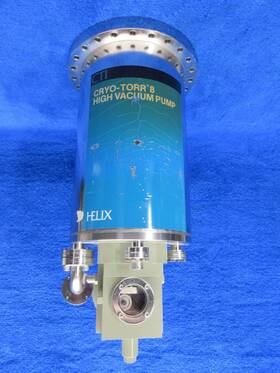
( Brand: Cti Cryogenics ), ( Manufacturer Part Number: 8033170 ), ( Type: Condensing High Vacuum Pump ), ( Country Of Origin: United States )
Review CTI CRYOGENICS Cryo torr Part# Pump
The **CTI Cryogenics 8033170 CTI-Cryogenics Cryo-Torr Cryo Pump** is a high-performance, closed-cycle cryogenic pump designed for precision vacuum applications where exceptional pumping speed, reliability, and efficiency are critical. Engineered for use in scientific research, semiconductor manufacturing, and advanced materials processing, this cryopump leverages cutting-edge cryogenic technology to achieve ultra-high vacuum (UHV) levels with minimal maintenance requirements. Its robust construction incorporates a compact yet durable design, featuring a hermetically sealed helium refrigeration system that operates continuously without the need for liquid nitrogen or other consumables, making it ideal for long-term, uninterrupted operation in demanding environments. The pump s advanced cryogenic cooling mechanism rapidly condenses and sorbs gases such as hydrogen, helium, neon, and water vapor, delivering superior pumping speeds particularly for light gases while maintaining a stable and consistent vacuum environment. With an integrated vacuum gauge and precise temperature control, the Cryo-Torr ensures accurate monitoring and optimization of performance, reducing downtime and enhancing experimental reproducibility. Its modular and scalable design allows for easy integration into existing vacuum systems, whether in research laboratories, cleanrooms, or industrial settings, where maintaining an ultra-clean and controlled atmosphere is essential. Built to withstand rigorous operating conditions, the CTI Cryogenics 8033170 is constructed from high-purity materials and features a sealed, oil-free pumping mechanism, eliminating the risk of contamination and ensuring compliance with stringent industry standards. Whether used in surface science, thin-film deposition, or particle accelerator applications, this cryopump exemplifies the pinnacle of cryogenic vacuum technology, offering unparalleled efficiency, durability, and performance for the most exacting scientific and industrial demands.
### **Pros and Cons of buying a CTI Cryogenics 8033170 (CTI-Cryogenics Cryo-Torr Cryo Pump)**
#### **Pros**
1. **High Efficiency and Performance**
The CTI Cryogenics 8033170 is a cryopump designed for ultra-high vacuum (UHV) applications, offering exceptional pumping speeds for gases like helium, hydrogen, and other light gases. Its cryogenic cooling system ensures rapid and effective gas adsorption, making it ideal for research and industrial environments where high vacuum levels are critical.
2. **Versatility in Applications**
This cryopump is widely used in scientific research, semiconductor manufacturing, surface science, and thin-film deposition. Its ability to handle a broad range of gases and its compatibility with various vacuum systems make it a flexible choice for different experimental setups.
3. **Long Lifespan and Durability**
Cryopumps are known for their longevity, especially when properly maintained. The CTI model is built with robust materials and advanced cooling technology, reducing the need for frequent replacements or repairs. This makes it a cost-effective investment in the long term.
4. **Low Operating Costs**
Unlike mechanical pumps, cryopumps do not require continuous power consumption once the cryogenic cooling is established. The primary energy cost comes from the cryogenic refrigerant (e.g., liquid nitrogen or helium), which can be managed efficiently with proper storage and delivery systems.
5. **Minimal Maintenance Requirements**
Compared to mechanical pumps, cryopumps have fewer moving parts, reducing wear and tear. Regular maintenance typically involves checking refrigerant levels and ensuring proper thermal insulation, which is straightforward compared to the maintenance of turbomolecular or diffusion pumps.
6. **Compatibility with Existing Systems**
The CTI Cryogenics 8033170 is designed to integrate seamlessly with many vacuum chamber configurations. Its modular design allows for customization to fit specific experimental requirements, making it adaptable to retrofitting or new installations.
7. **Environmentally Friendly**
Cryopumps do not use oil or other consumables that can contaminate the vacuum environment. This makes them a cleaner alternative to oil-sealed mechanical pumps, particularly in applications where purity is paramount, such as in semiconductor fabrication or materials science.
---
#### **Cons**
1. **High Initial Cost**
Cryopumps, including the CTI 8033170, are significantly more expensive upfront compared to mechanical pumps like rotary or diaphragm pumps. The cost includes not only the pump itself but also the cryogenic cooling infrastructure, such as liquid nitrogen or helium delivery systems.
2. **Dependence on Cryogenic Refrigeration**
The pump requires a continuous or frequent supply of cryogenic refrigerant to maintain operating temperatures. This adds operational complexity and cost, as liquid nitrogen or helium must be stored and replenished regularly. Downtime due to refrigerant shortages can disrupt experiments or production processes.
3. **Limited Pumping Speed for Heavy Gases**
While cryopumps excel at pumping light gases (e.g., helium, hydrogen), their effectiveness diminishes for heavier gases like nitrogen, argon, or water vapor. In applications requiring high pumping speeds for these gases, additional pumps (e.g., turbomolecular or ion pumps) may be necessary, increasing system complexity and cost.
4. **Thermal Management Challenges**
The cryopump must be properly insulated to prevent heat ingress, which can reduce efficiency or damage the pump. Poor thermal management can lead to increased refrigerant consumption and reduced lifespan. This requires careful installation and maintenance.
5. **Slow Warm-Up and Cooldown Times**
After shutdown, the pump must be warmed up gradually to avoid thermal shock, which can take several hours. Similarly, achieving full pumping efficiency after startup requires sufficient cooldown time. This can be a limitation in applications where rapid cycling is needed.
6. **Potential for Contamination**
While cryopumps are generally clean, improper handling or maintenance (e.g., introducing impurities during refrigerant refilling) can lead to contamination of the vacuum system. This risk is mitigated by proper procedures but adds an extra layer of operational complexity.
7. **Limited Availability of Spare Parts and Support**
High-end cryopumps like the CTI 8033170 may have longer lead times for spare parts or technical support, depending on the supplier. This could result in extended downtime if repairs are needed urgently.
8. **Not Ideal for High-Pressure Applications**
Cryopumps are designed for ultra-high vacuum (UHV) and high-vacuum (HV) applications but are not suitable for roughing or pumping against high-pressure backfills. A roughing pump (e.g., rotary or turbomolecular) is typically required to bring the system to the appropriate pressure range before the cryopump can be effective.
---
### **Conclusion**
The CTI Cryogenics 8033170 is a high-performance cryopump that excels in ultra-high vacuum applications where light gas pumping, purity, and long-term reliability are critical. Its advantages in efficiency, low maintenance, and compatibility with sensitive environments make it a valuable asset for research and industrial settings. However, its high initial cost, dependence on cryogenic refrigeration, and limitations with heavy gases or rapid cycling must be carefully considered.
For applications requiring **ultra-high vacuum, minimal contamination, and long-term reliability** such as in semiconductor manufacturing, surface science, or advanced materials research the CTI 8033170 is a strong recommendation. It is particularly well-suited for environments where other pump types (e.g., turbomolecular or ion pumps) are insufficient for light gas handling.
For applications where **cost sensitivity, frequent pressure cycling, or heavy gas pumping** are primary concerns, a hybrid system combining a cryopump with other pump types (e.g., turbomolecular for roughing and heavy gases) may be more practical. Additionally, users should ensure they have access to reliable cryogenic supply and maintenance support to maximize the pump s performance and lifespan.
### **Recommendation**
**Buy the CTI Cryogenics 8033170 if:**- Your application requires ultra-high vacuum with minimal contamination.
- You are working with light gases (e.g., helium, hydrogen) and need high pumping speeds.
- Long-term reliability and low maintenance are priorities.
- You have access to a stable cryogenic refrigerant supply (e.g., liquid nitrogen or helium).
- Budget constraints allow for the higher upfront cost, as the pump will pay off in operational efficiency and longevity.
**Avoid or reconsider if:**- Your budget is limited, and mechanical or turbomolecular pumps can meet your vacuum requirements.
- Your application involves frequent pressure cycling or heavy gas pumping, where a cryopump may not be the most efficient choice.
- You lack access to reliable cryogenic supply or technical support for maintenance.
- The system will be used in environments where rapid startup or shutdown is critical.
In cases where the CTI 8033170 is deemed suitable, pairing it with a robust cryogenic delivery system and proper training for maintenance will ensure optimal performance. For mixed-gas applications, consulting with vacuum system engineers to design a hybrid pumping solution may further enhance efficiency.
Details:
Part number 8033170. Unit is sealed and clean. We reuse boxes and packaging to help the environment. Came from a lab that was retiring nearly the entire with usual lot of spares.
Exterior is excellent - only a faded front sticker. Up for sale is a CTI-Cryogenics Cryo Pump model Cryo-Torr 8. The item has been cleaned and handled as best possible. This pump was with the spares - not in use.
While untested, all other equipment from this supplier has proven functional.
part #: 8033170 price
- $1250.00
specifications valvplu:
- brand: Cti Cryogenics
- mpn: 8033170
- type: Condensing High Vacuum Pump
- country of origin: United States
general valvplu:
- Pumps Pump Accessories > Vacuum Pumps > Other Vacuum Pumps
- condition: For parts or not working
offer valvplu:
- availability: In Stock
- quantity: 1
- started: April 24, 2026
- sold: 0
- best offers: True
- options: Ship-to-home
payments valvplu:
- credit card: Mastercard
- wallet: Google-pay
- other
seller valvplu:
- rating: 100.0%
- city: Madison, Wisconsin
- # reviews: 2470
returns valvplu:
- policy: Returns Accepted
- method: Money back
- time: 30 Days
- paid by: Buyer
shipping valvplu:
- type: Calculated
- transit: 3-5 Days
- service: UPS Ground
- class: Standard
- carrier: UPS
- cost: $70.58
Cti Cryogenics 8033170 Is Similar To:
- 1020r Cti Cryogenics Cti-cryogenics Compressor (61.3% similar) On the ask a question link at bottom of this listing. Buyer pays for all shipping costs. Warranty the items in this listing are sold as-is no. Manufacturer: Cti Cryogenics condition: for parts or not working. Items are described to the best of our ability. Please for details. For estimated cost ...(January 30th, 2018)
- 250f Cti Cryogenics Onboard Cryo Pump Vacuum Cryogenic Rebuilt (45.7% similar) It is ready to work. This Cti Cryogenics 250F vacuum pump is used, rebuilt, and tested...(September 21st, 2018)
- 2k21c3r 236a-6a Cti-cryogenics Module For (37.7% similar) Compatibility issues are not considered DOA. All parts, including accessories and cables are only included if pictured or listed in the. All pictures are taken in house. Save packaging for carrier claim. USPS or ups ground. Are only included if pictured or listed in. All parts, accessories, cables, ...(February 17th, 2018)
- 8011 Cti Cryogenics Used Control Module Free Shipping (42.4% similar) Do not duplicate or copy. I hold the winning bidder accountable for his her bid. Delivery confirmation is used. Buyer pays shipping charges as stated. Sold as-is pictured. No warranty. I also include numerous photos with all of my listings. Template made by. I try to be accurate in my. Used Cti ...(September 4th, 2018)
- 8018182 Cti Cryo-torr 10 Vacuum Pump W (48.5% similar) A forklift is onsite to load suitable vehicle. Weather and had some rain on it. Some controls have been removed but comes with everything shown. Cryo-torr Cti high vacuum pump model , removed from working environment but sat outside so. Items over 150 lbs. Char auto-tech ii control, 818 cryo pump ...(February 25th, 2018)
- 8031346g002 Helix Water Cooled Cryo Compressor Cti Cryogenics (22.2% similar) 8MAX input power Cti-cryogenics helix 8500 water cooled cryo compressor refurbished unit, 60 day return warranty. Us domestic only. 75 karate fl Lr current a flat rate shipping vac 60HZ 50HZNOM power factor...(August 27th, 2018)
- 8032-224 Cti Cryogenics Model Sc Helix Helium Air Compressor (36.8% similar) Shipping contents: 1 Cti Cryogenics model SC compressor 8032-224LISTING is sold as. Working condition: very recently pulled from environment. Bruin computer trading buying on: Cti Cryogenics model SC helix helium air compressor physical condition: unit is in fair condition with signs of use, ...(September 19th, 2018)
- 8032222g008 Cti-cryogenics Cable 6 Pin (46.6% similar) Please first before buying on an item if you choose this method. This is a Cti-cryogenics 8032222G008 cable 6 pin, in good used condition. INDUSTRIALCONNECTIONS5B...(November 29th, 2017)
- 8033168 Cti-cryogenics Cti Cryo-torr 8 (62.1% similar) The drive motor sounds good, and there appear to be no issues with scotch-yoke assembly. The pump cools down in about roughing valve, purge gas solenoid, and heater are not included. We ran this for weeks at a time. For sale is a Cti-cryogenics cryo torr 8 pn high vacuum pump. There were no ...(September 4th, 2017)
- 8033168r Cti-cryogenics Cti Cryogenics Cryo (53.7% similar) ...(January 17th, 2018)
- 8042002g003 Cti-cryogenics Helix Vacuum-pump Temperature (39.7% similar) Your satisfaction is extremely important to us. width in inches: 16. If in doubt, please before purchasing. If you do receive the package, submit clear images of packaging box and damaged item from multiple angles. length in inches: 16. Do not discard the packaging. Are only included if pictured...(February 1st, 2018)